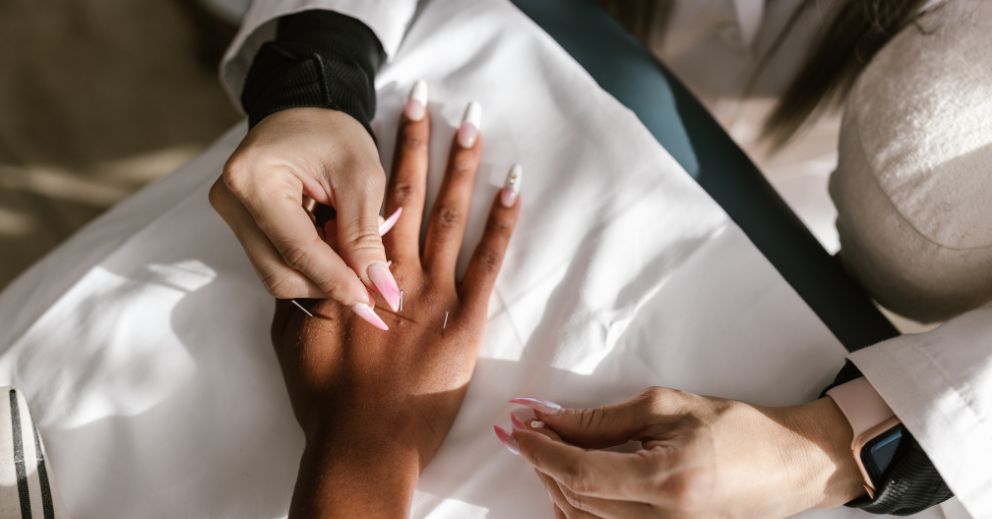
Here’s what actually happens when you sit down for a Traditional Chinese Medicine consultation. Your practitioner checks your pulse at your wrist, asks to look at your tongue, and spends time simply observing you before any treatment begins. It looks simple from the outside, but each step is gathering specific information that shapes everything that follows.
If you’ve never had a TCM diagnosis before, knowing what to expect can make the whole process feel a lot less mysterious. This guide walks through exactly how pulse checking, tongue reading, and general observation work together to build a picture of your health.
TLDR: TCM diagnosis relies on three core techniques, pulse palpation, tongue examination, and broader observation of your body and behaviour. Each one gives the practitioner different clues about what’s going on internally, and together they help form a treatment plan that’s specific to you rather than generic.
Why TCM Uses Multiple Diagnosis Methods Instead Of One Test
Western medicine often leans on a single test to confirm a diagnosis, a blood panel, a scan, an x-ray. TCM works differently. It treats the body as a connected system, so no single sign tells the full story on its own.
That’s why practitioners combine several diagnostic techniques rather than relying on just one. Pulse, tongue, and observation each reveal a different layer of what’s happening inside you.
The Four Pillars Of TCM Diagnosis
- Observation (looking at your face, posture, skin, and tongue)
- Listening and smelling (voice tone, breathing, body odour)
- Asking (questions about sleep, digestion, stress, and symptoms)
- Touching (pulse palpation and sometimes abdominal palpation)
What This Means For Your Appointment
Expect your first session to take longer than a quick check-up. There’s a reason for that: your practitioner is piecing together information from multiple sources before recommending treatment.
This is also why two people with the same complaint, say, ongoing fatigue, might walk away with completely different treatment plans. The underlying pattern each person shows up with can be quite different.
How Pulse Diagnosis Works Step By Step
Pulse diagnosis is one of the more distinctive parts of a TCM consultation. It’s not just about counting beats per minute like a nurse might do with a stethoscope.
Where And How The Pulse Is Checked
- The practitioner places three fingers along the radial artery at your wrist
- Each finger position corresponds to different organ systems
- Both wrists are usually checked, since left and right can reflect different things
- The practitioner notes qualities like speed, strength, rhythm, and depth
What The Pulse Can Reveal
- A rapid pulse may point to heat or inflammation in the body
- A slow pulse can suggest cold or slowed metabolic function
- A weak or thin pulse may indicate depleted energy or blood
- A wiry or tense pulse is often linked to stress or stagnation
None of these findings are used in isolation. They’re cross-checked against what shows up in your tongue and general presentation before any conclusions are drawn.
Reading The Tongue: What Practitioners Are Actually Looking For
Tongue diagnosis can feel a bit unusual if you’re new to it, but it’s one of the most information-rich parts of the assessment. The tongue is viewed as a map that reflects internal organ health.
Features Practitioners Assess
- Colour of the tongue body (pale, red, purple, or bluish)
- Coating thickness and colour (thin white, thick yellow, or none at all)
- Shape and texture, including cracks, swelling, or a scalloped edge
- Moisture levels, whether the tongue looks dry or overly wet
Common Tongue Presentations And What They Might Suggest
A pale tongue can point towards blood deficiency or general fatigue patterns. A red tongue with little coating is often linked to heat or fluid depletion in the body.
A thick, greasy coating might suggest dampness or digestive sluggishness. These are starting points for discussion, not standalone diagnoses on their own.
Things That Can Temporarily Skew Tongue Readings
- Coloured foods or drinks like coffee, turmeric, or berries
- Scraping or brushing your tongue right before your appointment
- Certain medications that dry out the mouth
It’s worth mentioning any of these to your practitioner if they apply to you before your visit, so the reading can be interpreted accurately.
General Observation And Questioning: The Full Picture
Beyond pulse and tongue, a TCM practitioner is also watching and listening throughout the entire consultation. This part often happens without you even noticing.
What’s Being Observed
- Skin tone, complexion, and any visible puffiness or dryness
- Posture, movement, and general energy levels
- Voice strength, breathing pattern, and speech pace
- Eyes, including brightness and any redness
The Questions You’ll Likely Be Asked
Expect questions about sleep quality, digestion, menstrual cycle if relevant, stress levels, and temperature preferences. These might seem unrelated to your main concern, but they help build context around your overall pattern.
Answering honestly, even about things that feel unrelated or embarrassing, gives your practitioner a clearer picture to work from. There’s no judgement involved, just information gathering.
Bringing It All Together Into A Treatment Plan
Once pulse, tongue, and observation findings are combined, your practitioner identifies a pattern, sometimes described in terms like qi deficiency, dampness, or blood stagnation. This pattern guides the treatment approach, whether that’s acupuncture, herbal medicine, or lifestyle adjustments.
At Village Remedies, this diagnostic process forms the starting point for every new patient consultation, since treatment recommendations are built around what’s actually observed rather than a one-size-fits-all approach. It’s also why follow-up visits often include a quick pulse and tongue check again, to track how things are shifting over time. Get in touch today.
Key Takeaways
- TCM diagnosis combines pulse checking, tongue examination, and general observation rather than relying on one test
- Pulse quality, speed, and rhythm offer clues about internal organ function and energy levels
- Tongue colour, coating, and shape reflect patterns like heat, cold, dampness, or deficiency
- Questions about sleep, digestion, and stress add context that pulse and tongue alone can’t provide
- The combined findings shape a treatment plan specific to your presenting pattern, not just your symptom
FAQ
Do I need to prepare anything before a TCM diagnostic consultation?
Try to avoid coloured foods, drinks, or tongue scraping for a few hours beforehand, since these can temporarily change how your tongue looks. Otherwise, no special preparation is needed, just show up ready to answer questions honestly.
Can TCM diagnosis pick up on issues Western tests might miss?
TCM diagnosis works on a different framework, focused on patterns and imbalances rather than named diseases. It can sometimes flag functional issues, like early signs of fatigue or digestive imbalance, before they show up clearly on standard tests, though it isn’t a replacement for medical screening.
How long does a full diagnostic assessment usually take?
A first consultation involving pulse, tongue, and detailed questioning generally runs longer than a standard follow-up, often somewhere between 45 minutes to an hour. Follow-up checks are usually much quicker since the practitioner already has your baseline pattern on file.
Will the diagnosis change over multiple visits?
Yes, it’s common for pulse and tongue findings to shift as your body responds to treatment or as circumstances like stress and sleep change. Practitioners often reassess at each visit to make sure the treatment plan still matches what’s currently going on.
Is pulse and tongue diagnosis accurate on its own without other tests?
It’s considered accurate within the TCM framework for identifying patterns and guiding treatment, but it isn’t designed to diagnose named medical conditions the way a blood test or scan would. Many patients use TCM diagnosis alongside, rather than instead of, regular medical care.